
Not too long after our failed domestic adoption just four months ago, we knew that one day we would pick up the pieces of our broken hearts and move forward in our quest to have children. Just where will that take us? We really haven't a clue. We contemplated another attempt at domestic adoption, thought about artificial insemination, considered another attempt at in vitro fertilization, spoke about international adoption and we even discussed surrogacy. Yes, we actually had offers from friends and family alike!
After a considerable amount of thought and discussion, we agreed to pick up from where we left off last March and decided that international adoption was our path. Last year we explored many options including adopting orphans from South Korea, China, Guatemala, Russia and Ukraine. We did a considerable amount of research prior to narrowing our list down to the above-mentioned countries.
Things are different this year however. South Korea had since began a strong campaign to expand their own domestic adoptions, thereby limiting how many children were available to foreigners. Their campaign was largely successful and has slowed international adoptions down to a trickle as a result.
China has newly implemented rules and regulations that will definitely hamper the ability of those who wanted to adopt from China from doing so. China had been the most popular of all countries that Americans adopted from over the past few years. Because of Chinese governmental changes and the program's popularity, waiting times in excess of two years is not unusual.
Guatemala has their own internal issues not to mention the Hague Convention Treaty, a discussion of which would take up more space than what is allowed on this website. Recently, the US Secretary of State has stated that unless Guatemala becomes Hague compliant, which could take years to do, adoptions will come to a grinding halt once the US ratifies the treaty. Most expect this to take place yet this year.
Russia has since not reaccredited or certified those agencies with which it used to allow help facilitate adoptions. This not only included all 80+ US agencies but agencies from all over the world. Since March, there are no agencies left who are approved to handle international adoptions from Russia. Russia, not unlike South Korea, had made a huge effort to push for domestic adoptions and is providing financial incentives to encourage their citizens to do so. Unlike South Korea, their efforts haven't been quite as successful. South Korea has had ample success in becoming a major player in the world's economy and its citizens have reaped some of the rewards. Thankfully there is less of a need for foreigners to help South Korea in raising her children. On the other hand, Russia has not had the same success and many of it's citizens still struggle as they continue their political and economical reforms. Some estimate that there are well over 700,000 Russian children in orphanages. Russia knows their situation is dire, however, not unlike Americans, they are a proud people who shutter at the idea that foreigners need to come in and help raise its children. Add to this that the political climate is as tense as it has been since the "Cold War" ended over twenty years ago too. All of these things are just pieces of a larger puzzle that have hampered the entire process in Russia.
Ukraine has revamped there entire international adoption program and now only allows completely independent adoptions. This makes the use of any outside agency's help illegal. Their rules and regulations change on an almost monthly basis and is resulting in a very unstable and sometimes painfully slow process. Their process is probably best for only the brave and faint of heart.
After many hours of research, hundreds of email correspondences, many discussions in chat rooms, message boards and forums, several telephone conversations and a lot of soul searching, we finally made a decision and decided to embark on a course to Russia. This was our first county of choice when this first began last year and Russia remains our first country of choice today.
Expanding Our Family Through Adoption. This is Our Story
Welcome!
We are home from St. Petersburg, Russia with our beautiful twin boys Sergei & Roman! Here, you're welcome to check in on our latest forays from time to time.
Feel free to add comments and to share the link with others who may be interested.
Feel free to add comments and to share the link with others who may be interested.
Our Timeline
- 01/26/07 - Submitted I-600A
- 01/30/07 - Homestudy Agency
- 02/24/07 - Fingerprints Done
- 03/16/07 - Homestudy Done
- 03/21/07 - Choose Russia
- 04/11/07 - Apply for Passports
- 06/28/07 - Signed on with CSS
- 07/04/07 - CSS Reaccredited
- 08/01/07 - Received Referral
- 08/02/07 - Completed Dossier
- 08/06/07 - Accepted Referral
- 08/16/07 - Notice of 1st Trip
- 08/17/07 - Applied for Visas
- 08/18/07 - Received I-171H
- 09/09/07 - First Trip
- 09/16/07 - Return From Trip 1
- 09/20/07 - Court Date Notice
- 10/14/07 - Second Trip
- 10/18/07 - Court Date
- 10/28/07 - Home Sweet Home!
St. Petersburg
Orphanage #12
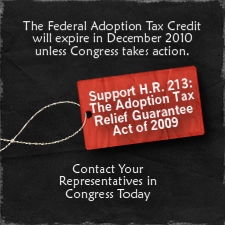
Adoption Tax Relief Guarantee Act of 2009


No comments:
Post a Comment